
Skip to content
  • Home
  • Subscribe / donate
  • Events calendar
  • News
    • Local
    • National
    • Israel
    • World
    • עניין בחדשות
      A roundup of news in Canada and further afield, in Hebrew.
  • Opinion
    • From the JI
    • Op-Ed
  • Arts & Culture
    • Performing Arts
    • Music
    • Books
    • Visual Arts
    • TV & Film
  • Life
    • Celebrating the Holidays
    • Travel
    • The Daily Snooze
      Cartoons by Jacob Samuel
    • Mystery Photo
      Help the JI and JMABC fill in the gaps in our archives.
  • Community Links
    • Organizations, Etc.
    • Other News Sources & Blogs
    • Business Directory
  • FAQ
  • JI Chai Celebration
  • JI@88! video

Recent Posts

  • Eby touts government record
  • Keep lighting candles
  • Facing a complex situation
  • Unique interview show a hit
  • See Annie at Gateway
  • Explorations of light
  • Help with the legal aspects
  • Stories create impact
  • Different faiths gather
  • Advocating for girls’ rights
  • An oral song tradition
  • Genealogy tools and tips
  • Jew-hatred is centuries old
  • Aiding medical research
  • Connecting Jews to Judaism
  • Beacon of light in heart of city
  • Drag & Dreidel: A Queer Jewish Hanukkah Celebration
  • An emotional reunion
  • Post-tumble, lights still shine
  • Visit to cradle of Ashkenaz
  • Unique, memorable travels
  • Family memoir a work of art
  • A little holiday romance
  • The Maccabees, old and new
  • My Hanukkah miracle
  • After the rededication … a Hanukkah cartoon
  • Improving the holiday table
  • Vive la différence!
  • Fresh, healthy comfort foods
  • From the archives … Hanukkah
  • תגובתי לכתבה על ישראלים שרצו להגר לקנדה ולא קיבלו אותם עם שטיח אדום
  • Lessons in Mamdani’s win
  • West Van Story at the York
  • Words hold much power
  • Plenty of hopefulness
  • Lessons from past for today

Archives

Follow @JewishIndie
image - The CJN - Visit Us Banner - 300x600 - 101625

Tag: Anglican Church

Ready to welcome refugees

Ready to welcome refugees

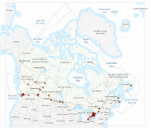
As of Nov. 24, the Government of Canada was processing 4,511 applications for privately sponsored Syrian refugees (not including Quebec, which has its own procedure). The map shows communities where private sponsors have submitted an application. (image from cic.gc.ca/english/refugees/welcome)

Vancouver’s Jewish community is mobilizing to welcome refugees from Syria. The federal government has announced that 25,000 Syrian refugees will come to Canada before the end of February. While most of those will be government-sponsored, groups of Canadians, including many in the Jewish community, are leaping at the opportunity to be a part of the resettlement project.

The Jewish Federation of Greater Vancouver has signed a memorandum of understanding with the Anglican church to streamline the process. The federal government has a number of sponsorship agreement holders, which are established, experienced groups that are engaged in aiding refugees on an ongoing basis. To expedite the process, the Jewish community is primarily working through the partnership with the Anglican Church of Canada so that synagogues and other Jewish groups that may want to sponsor can do so efficiently.

“The Anglican diocese, rather than setting up a separate relationship with each of the synagogues, proposed that there be one memorandum of understanding with the Jewish community,” said Shelley Rivkin, Federation’s vice-president for planning, allocations and community affairs. “We will be the holder of the memorandum of understanding so the synagogues will raise the funds and issue a tax receipt. The funds will then come to us and be in a restricted account and, as those funds are distributed, they will go directly through us so that the diocese is not having to deal with multiple parties.”

Or Shalom Synagogue has already raised two-thirds of the funds necessary to sponsor three families. Natalie Grunberg, a member of the Or Shalom Syrian Refugees Initiative, said they are expecting their sponsored refugees as early as January. The group has launched a series of events, including a concert of Syrian music, to raise awareness and money for the project. The federal government estimates the cost of sponsoring a refugee family for a year to be about $30,000, but Vancouverites involved in the process are working on an assumption of about $40,000, based on housing costs here.

Or Shalom is working through existing partnerships they have built over the years. Rather than going through the Anglican church, they are working with the United Church of Canada. Grunberg acknowledged that some in the Jewish community have differences with the United Church’s stand toward Israel, but the priority was to expedite the refugee sponsorship process and they believed working through existing relationships would be most effective.

Grunberg is noticeably proud of her congregation’s efforts so far.

“We’re a very small synagogue and we’re sponsoring three families,” she said.

Through existing relationships with the Syrian community here, Or Shalom will focus their sponsorship efforts on reunifying families that already have some members in Metro Vancouver and also on members of the LGBT community.

Temple Sholom is also rallying for refugees. Almost immediately after announcing the idea during the High Holidays, the synagogue raised enough money to sponsor one family.

“We’ve now decided to sponsor a second family,” said Rabbi Dan Moskovitz.

He acknowledges that there have been some anxieties among his congregation about bringing Syrian refugees here.

“I met with every person that voiced that concern to me,” he said. “I met with them personally. We talked about it. We talked about the people that we are bringing in – they were concerned about terrorists coming across – we talked about the difference between private sponsorship, as we are doing, and what we’ve been seeing in Europe with refugees flooding across borders … that we were sponsoring families with young children, that our sponsorships were family reunification, so they would have real roots here in B.C., particularly in Vancouver. We acknowledge the fears but at the same time we also recognize that this is a crisis and that the Jewish tradition teaches us quite clearly to love the stranger. Israel is doing things for refugees on the Syrian border right now with their hospitals and we had to do our part.”

Moskovitz cites Torah as the basis for his enthusiasm.

“Thirty-six times in the Torah, in the Bible, it says to love the stranger because you were once strangers in the land,” he said. “The Jews were once refugees ourselves and this goes all the way back to the land of Egypt and the slavery of the Israelites under Pharaoh, where we were running for our lives; in that case from the famine, according to the biblical story, and the Egyptian people welcomed the Jewish people, welcomed us in and gave us food and shelter and we lived there for 435 years, according to the Bible. From that and so many other times in the Bible, the most often-repeated commandment in all of Jewish tradition is to love the stranger, to love the immigrant; love the stranger, because that was you once.”

More modern Jewish history is also a factor, he added.

“We are largely still here even though throughout our history people have tried to destroy us because at critical times in our history some people took us in,” said Moskovitz. “We like to think we did it all by ourselves and there is no doubt that there is a tremendous resiliency of the Jewish people but, at the same time, we have been the beneficiary of others sheltering us at times of mortal danger.”

Congregation Beth Israel has created a task force to look into possibly sponsoring a Kurdish Syrian refugee family. Executive director Shannon Etkin said the group will analyze the resources available within the congregation community to provide for a family beyond the minimum requirements set out by the federal government.

Other synagogues, organizations and individuals who may not have the resources to directly sponsor a refugee or family are being encouraged to support on-the-ground efforts by the Joint Distribution Committee, which is aiding refugees in Turkey and Hungary. This support is being organized by the Jewish Federation of Greater Vancouver.

“They’re doing a lot of direct aid for women and children and also doing some work with frontline responders,” Rivkin said.

Format ImagePosted on December 11, 2015December 9, 2015Author Pat JohnsonCategories LocalTags Anglican Church, Beth Israel, Dan Moskovitz, Jewish Federation of Greater Vancouver, Natalie Grunberg, Or Shalom, refugees, Shannon Etkin, Shelley Rivkin, Syria, Temple Sholom, United Church of Canada

Campus, church extremism

Last week, students at the University of British Columbia rejected a referendum question that would have urged the student society to boycott Israeli businesses and products.

But the news was by no means all good when the results came in last Friday night. In fact, more students voted yes in support of BDS (boycotts, divestment, sanctions) than voted no. The question was defeated effectively on a technicality, with the number of students voting yes failing to reach quorum. Therefore the question failed.

Students were asked: “Do you support your student union (AMS) in boycotting products and divesting from companies that support Israeli war crimes, illegal occupation and the oppression of Palestinians?” The yes side received 3,493 votes, 2,223 students voted no and 435 registered their abstentions. To pass, the vote required 4,130 yeses, representing eight percent of eligible students.

In this, too, there is good news and bad news. The low turnout indicates that students at the university have better things on their mind than the conflict between Israel and its neighbors. It has become increasingly clear in recent years that the anti-Israel movement on college campuses in North America is comparatively small. Yet the damage this narrow group of extremists can do to the comfort and security of Jewish and Zionist students – and to the broader objective of an inclusive, welcoming environment – has been serious and detrimental.

The BDS movement has had few tangible successes and plenty of failures, if measured by their effectiveness at actually boycotting, divesting from or sanctioning anything. What they have been wildly successful at is spreading messages that single out Israel as the fountainhead of all things evil.

Also mixed news is the fact that, while campaigns like BDS are finding it difficult to rustle up serious numbers of equally agitated fellow travelers, Jewish students, too, are challenged in finding substantial numbers of allies when confronted with a campaign of targeted aggression against the Jewish homeland. There might be only a few thousand out of more than 50,000 students who succumb to anti-Israel messaging, but there are even fewer who observe that messaging and are moved to come to the aid of Israel – and/or Jewish students – when it is attacked in this fashion.

Which raises another issue facing our Vancouver community.

Later this month, Canadian Friends of Sabeel will hold a conference on “overcoming Christian Zionism.” Sabeel describes itself as an “ecumenical Palestinian liberation theology centre” that is “working for justice, peace and reconciliation in Palestine-Israel.” In reality, it is a group that promotes a misrepresentation of events in the Middle East. The conference slated for Vancouver is explicitly aimed at undermining Israel among its North American Christian supporters.

Conservative Christians have been among Israel’s most reliable bloc of friends in troubled times. Like any bedfellows, the Zionist-Christian alliance brings with it complexities. While some Christians use Zionism as a back door to evangelizing or view Christianity as a “successor” religion to Judaism, for example, there are also many in the Christian Zionist movement who respect the integrity of Judaism.

The upcoming conference is co-sponsored by three Christian churches.

The United Church of Canada, for decades but especially in recent years, has adopted a heavily anti-Israel approach to global affairs. Their sponsorship of this event is not surprising. The Presbyterian Church in Canada is also supporting this event, though this, too, is not shocking, given that the American branch of the Presbyterian Church has been beset by anti-Israel agitation and last year voted to divest itself of some Israeli holdings.

What is surprising – and worrisome – is the role of the Anglican Church of Canada as co-sponsor of this conference. Two years ago, the church passed a resolution that made some attempts at balance but was marred by typical anti-Israel boilerplate. With their co-sponsorship of this Sabeel event, the Anglican church has thrown itself unequivocally off the fence.

There are parallels between these two developments – the UBC vote and the involvement of erstwhile moderate Christian groups in a blatantly anti-Israel conference. The fact is, probably most active Anglicans, Presbyterians and United churchgoers have no idea what their national bodies are up to. Of the millions of Canadians represented by these three denominations, the vast majority probably do not have an opinion on – or do not agree with – the approach of this month’s conference. As we saw at UBC, the anti-Israel movement tends to be a small group of zealots who get involved in a legitimate body and turn it into a platform, a rabidly anti-Israel tail wagging an otherwise amicable dog.

Like the impact of anti-Israel extremism on campus, the involvement of mainline Christian groups in this anti-Israel conference shows how a small group of dedicated individuals can create nasty, lasting divisions in a multicultural community.

Posted on April 3, 2015April 1, 2015Author The Editorial BoardCategories From the JITags Anglican Church, anti-Israel, antisemitism, BDS, Presbyterian Church, referendum, Sabeel, UBC, United Church of Canada3 Comments on Campus, church extremism
Proudly powered by WordPress