Skip to content
  • Home
  • Subscribe / donate
  • Events calendar
  • News
    • Local
    • National
    • Israel
    • World
    • עניין בחדשות
      A roundup of news in Canada and further afield, in Hebrew.
  • Opinion
    • From the JI
    • Op-Ed
  • Arts & Culture
    • Performing Arts
    • Music
    • Books
    • Visual Arts
    • TV & Film
  • Life
    • Celebrating the Holidays
    • Travel
    • The Daily Snooze
      Cartoons by Jacob Samuel
    • Mystery Photo
      Help the JI and JMABC fill in the gaps in our archives.
  • Community Links
    • Organizations, Etc.
    • Other News Sources & Blogs
    • Business Directory
  • FAQ
  • JI Chai Celebration
  • JI@88! video

Recent Posts

  • Eby touts government record
  • Keep lighting candles
  • Facing a complex situation
  • Unique interview show a hit
  • See Annie at Gateway
  • Explorations of light
  • Help with the legal aspects
  • Stories create impact
  • Different faiths gather
  • Advocating for girls’ rights
  • An oral song tradition
  • Genealogy tools and tips
  • Jew-hatred is centuries old
  • Aiding medical research
  • Connecting Jews to Judaism
  • Beacon of light in heart of city
  • Drag & Dreidel: A Queer Jewish Hanukkah Celebration
  • An emotional reunion
  • Post-tumble, lights still shine
  • Visit to cradle of Ashkenaz
  • Unique, memorable travels
  • Family memoir a work of art
  • A little holiday romance
  • The Maccabees, old and new
  • My Hanukkah miracle
  • After the rededication … a Hanukkah cartoon
  • Improving the holiday table
  • Vive la différence!
  • Fresh, healthy comfort foods
  • From the archives … Hanukkah
  • תגובתי לכתבה על ישראלים שרצו להגר לקנדה ולא קיבלו אותם עם שטיח אדום
  • Lessons in Mamdani’s win
  • West Van Story at the York
  • Words hold much power
  • Plenty of hopefulness
  • Lessons from past for today

Archives

Follow @JewishIndie
image - The CJN - Visit Us Banner - 300x600 - 101625

Category: Books

Singing on social issues

Singing on social issues

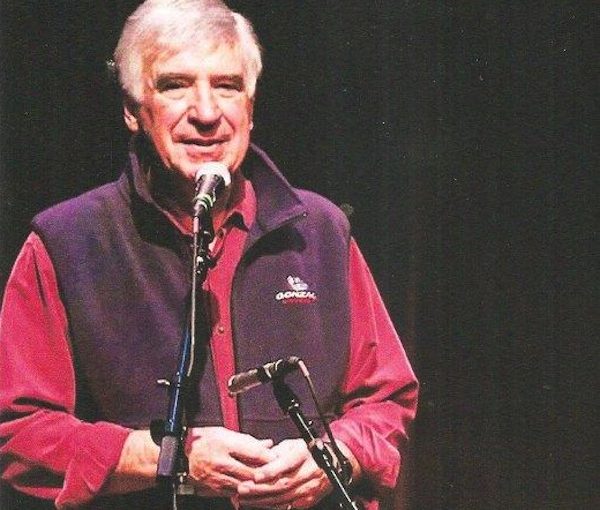
Mike Kobluk (the Chad Mitchell Trio) is one of the musicians featured in Under the Radar, by David Eisenstadt. (photo from Trail Times)

image - Under the Radar book coverUnder the Radar: 30 Notable Canadian Jewish Musicians, which I wrote with Alan L. Simons (editor), takes an historical approach, covering musicians of most genres and genders, some alive and others having passed on, all skilled, but excelling somewhat out of sight. This is the third in a three-part series of excerpts from the book, which was released last November, and is available in paperback and as an ebook from amazon.ca. The excerpts feature performers with B.C. roots: Robert Silverman, Ben Mink and Mike Kobluk.

In 1958, as students attending Gonzaga University in Spokane, Wash., William Chadbourne Mitchell, Mike Kobluk and Mike Pugh formed the Chad Mitchell Trio. Their repertoire criticized the Cold War and the Vietnam War while championing civil rights. Many of John Denver’s early songs were part of their songlist.

Kobluk, who is Jewish, was born in Trail, B.C. As a child, he sang for fun, but “singing for a career … never entered [his] mind.” He majored in English and math at Gonzaga. He spent 10 years – the longest-serving vocalist with the trio – before leaving in 1969.

But, going back. In the summer of 1959, a friend of Mitchell’s “hatched the plan that started us on a professional career” and the trio journeyed to New York to begin that chapter in their lives, according to Kobluk.

By May 1960, they signed with Harry Belafonte’s management company and performed with Belafonte, Pat Boone and Arthur Godfrey.

After two albums were pressed – The Chad Mitchell Trio and In Concert – Everybody’s Listening – Pugh left the group in the fall of 1960 to return to university. Mitchell and Kobluk auditioned more than 150 vocalists, including Tom Paxton. They chose Joe Frazier and, according to The Virgin Encyclopedia of Popular Music, the group cut nine albums together.

Initially, the trio recorded on the Colpix label. Their sound soared recording for Kapp Records, with tunes like “Lizzie Borden” (about the accused axe murderer), “Mighty Day” (remembering the Galveston, Tex., hurricane of 1900) and the Prohibition-era tune “Rum by Gum.” Other songs included “The Ides of Texas” (about financier Billie Sol Estes) and “The John Birch Society.” On their live album, they sang “Moscow Nights” in Russian, a controversial decision at the time.

Interviewed by the Trail Times, Kobluk said that, “in the early 1960s, we worked with Belafonte, culminating in a Carnegie Hall concert he hosted featuring Miriam Makeba, Odetta, the Belafonte Singers and us.” As part of a U.S. cultural exchange program, the trio also toured South America in 1962.

“Over time,” he added, “we’d renew our association with Belafonte and, years later, when the Selma, Ala., march with Dr. Martin Luther King was being organized, our reputation put us on Belafonte’s list.”

They left Belafonte Enterprises in 1962 for Mercury Records, adding provocative songs like “The Draft Dodger Rag” and “Barry’s Boys,” the latter of which lampooned Barry Goldwater’s Republican 1964 presidential run.

Mitchell quit the band in 1965, replaced by John Denver, then a relatively unknown singer/songwriter. The musicians retained the well-known Mitchell Trio name with Denver, “who stayed for three years, writing many of the group’s songs,” notes The Virgin Encyclopedia. In 1966, Frazier was replaced by David Boise. In 1969, when Kobluk departed, Michael Johnson joined. Because of contract legalities, the Mitchell name could no longer be used and the group became known as Denver, Boise and Johnson. But it was shortlived – they disbanded in 1969.

Kobluk told the Trail Times, “[We] performed songs of political and social commentary, not exclusively, but such material was an important part of any program. Equal opportunity and voting rights for all were high on our personal and professional priority list and fodder for such commentary.”

Kobluk, Frazier and Boise moved to careers outside the music business, Mitchell cut various solo albums and Denver’s career as a solo performer soared. Johnson recorded more than 15 solo albums and Frazier became an Episcopal Church priest.

On Nov. 15, 2014, in Bethesda, Md., the trio shared a final stage at a “farewell” concert, with singer/guitarist Ron Greenstein replacing Frazier, who died in March of that year.

Format ImagePosted on February 11, 2022February 10, 2022Author David EisenstadtCategories BooksTags Chad Mitchell Trio, Mike Kobluk, music, Under the Radar
Secret Jewish fighters

Secret Jewish fighters

Leah Garrett has pieced together the most comprehensive story yet of a little-known but fascinating footnote to the Second World War, and she shares her findings in her new book, X Troop. (photo by Deb Caponera / Hunter College)

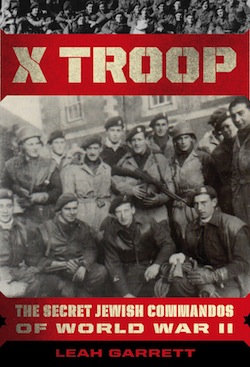
Using recently declassified military records and interviewing family members, author Leah Garrett has pieced together the most comprehensive story yet of a little-known but fascinating footnote to Second World War history – and the role that a few score of Jewish men played at pivotal moments in the conflict.

Garrett is a professor at Hunter College, in New York City. As part of the Cherie Smith JCC Jewish Book Festival, she will speak about her new book, X Troop: The Secret Jewish Commandos of World War Two, in a virtual event on Feb. 6.

X Troop tells of the 87 men – 83 of them Jewish – who made up the No. 10 (Inter-Allied) Commando, 3 Troop. The secret weapon X Troop members shared was that most of them were from German-speaking parts of Europe, had escaped occupied countries and, as Jews, had a deeply personal drive to defeat the Nazis.

Formed officially on July 2, 1942, the unique commando unit would, among other things, allow British forces to expedite interrogation of captured Axis soldiers.

“X Troop would be Britain’s secret shock troop in the war against Germany,” Garrett writes. “They would kill and capture Nazis on the battlefield. But that would not be all. They would also immediately interrogate captured Germans, be it in the heat of battle or right afterward. The men’s fluency in German would enable them to get essential intelligence that would guide the next moment’s choices rather than having to wait to interview prisoners until they were back at headquarters.”

No less than Winston Churchill himself gave the group their nickname.

“Because they will be unknown warriors … they must perforce be considered an unknown quantity. Since the algebraic symbol for the unknown is X, let us call them X Troop,” declared the then-prime minister of the United Kingdom.

One of the many consequential incidents, which could have turned disastrous, was when two troop members, whose anglicized noms de guerre were Roy Wooldridge and George Lane, were captured by the Germans and taken to a command post. The next day, they were driven to the French countryside and, instead of being summarily executed as they had feared, found themselves in the château that was serving as headquarters for field marshal Erwin Rommel.

“During his training … Lane had been taught to give only his (fake) name, rank and serial number if he was captured,” writes Garrett. “But instead he found himself having an extended conversation with the field marshal over tea. Lane fortunately recovered his composure and didn’t say anything that would give him and his comrade away.”

Later, when they were transferred to a POW camp in central Germany, which was filled with 300 British officers, the pair was able to share their knowledge of Rommel’s location – information that was surreptitiously conveyed back to London through a hidden homemade wireless radio.

“A few months later … during the Normandy campaign, Rommel’s staff car was strafed by RAF Spitfires as he drove from Château de La Roche-Guyon to the front near Saint-Lô. The attack left Rommel, one of Germany’s best and most creative generals, with serious injuries, and from that moment on his participation in the war was effectively over,” notes Garrett.

The irony was that some of the members of X Troop suddenly transformed from prisoners of war – Jews of German or Austrian origin, who were viewed as “enemy aliens” – to members of an elite British military troop.

image - X Troop book cover“I found it rather odd that one day I could not be trusted with anything more lethal than a broomstick and the next I was told that I was going to be a spy for the British,” said one member, Tony Firth. “But who said that the English are logical?”

The men faced a fourfold risk if captured. Hitler had ordered Allied commandos to be shot on sight. As refugees from Europe who may have still had family in Nazi-occupied areas, they risked not only their own lives, but those of their families. As Jews, they were the explicit target of state-sanctioned murder and, as German or Austrian nationals, they would be considered traitors to their homelands if captured.

The commandos were trained in a Welsh village and, though each had each created a false persona, it took wilful blindness for the village folk to not realize there was something odd about these particular British soldiers. Recalled one townswoman, “… when we would ask them what nationality they were, they would say: ‘Vee are English.’” (A memorial to X Troop in that Welsh village today ostentatiously omits the fact that almost all of them were Jewish.)

Though trained together and with a tight-knit sense of camaraderie, the troop was deployed not as a group but across the British military. The book follows members of the troop through heroics and horrors at Normandy and in Egypt, Italy, Greece and Yugoslavia. In the end, half of the men would be killed, wounded or forever missing in action.

Some reviewers have drawn parallels between the real-life exploits of X Troop and a 2009 Hollywood blockbuster, but Garrett contrasts the facts and fictions. “Whenever possible, the X Troopers used their intelligence to outmanoeuvre the Nazis and to capture them before a shot was fired,” she writes. “In this regard, the X Troopers were the opposite of Quentin Tarantino’s vengeful Jews in his film Inglourious Basterds. Rather than wreaking personal revenge on the Germans, they followed the rules of war. They coolly collected battlefield intelligence from the enemy and outwitted them using their intellect rather than brute force. And even in extreme instances, such as when Colin Anson confronted the man who had been responsible for his own father’s death, they refused to compromise their own moral standards.”

Among the lessons the author aims to convey is the heroism of Jews in the fight against Nazism, adding a new layer to a growing literature on resistance of various forms.

“Through their exemplary and courageous service,” Garrett writes, “their story challenges the idea that only in Israel did the Jews become armed warriors who fought to try to establish a safe life for themselves and their families.”

Garrett’s Feb. 6 book festival event starts at 3:30 p.m. For tickets, visit jccgv.com/jewish-book-festival.

Format ImagePosted on January 28, 2022January 27, 2022Author Pat JohnsonCategories BooksTags history, Holocaust, JCC Jewish Book Festival, Leah Garrett, war, X Troop
Poetry and painting flourish

Poetry and painting flourish

Pnina Granirer launches her new book, Garden of Words, at the Cherie Smith JCC Jewish Book Festival Feb. 9. (photo from JBF)

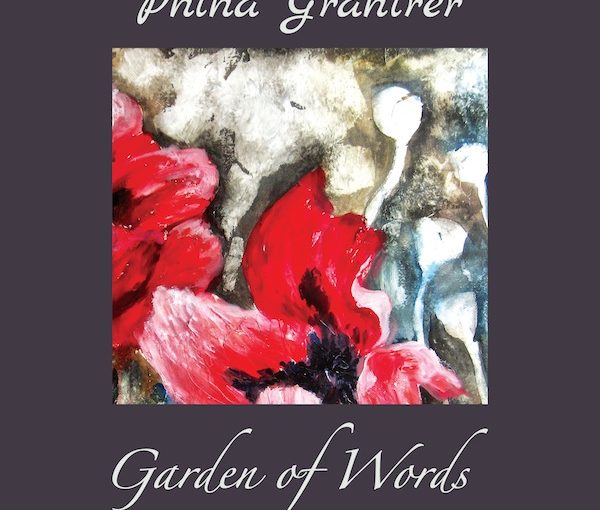
“Unexpected and unplanned, like small gifts offered by a kind friend, poems have been forming in my head ever since I was a child,” writes Pnina Granirer in her most recent book, Garden of Words. “Unexpected” is the perfect word for Granirer, who continually reinvents her artistic self.

Garden of Words is a beautiful mix of Granirer’s painted “words” and her written ones, her more distant past and recent experiences, including the loss of her life-partner of more than 65 years, in August 2020. The book is dedicated to Eddy and the final poem (“Goodbye”) and image (“Eddy Studying During Power Outage,” 1957, charcoal on paper) are of him.

This collection is a very personal work that shows Granirer’s powers of observation, both in her paintings and drawings, as well as in her poetry. It also shows her strength via her willingness to be vulnerable.

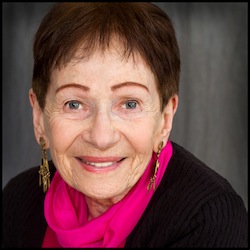
photo - Pnina Granirer
Pnina Granirer (photo courtesy JBF)

Two poems are part of the book’s foreword. The first, explains Granirer, who was born in Romania, “expresses the joy and happiness of a 10-year-old when on August 23, 1944, the Soviet Red Army entered our town, on the day that the cattle cars were waiting at the train station to take us away to the concentration camps. It had been a narrow escape, indeed!” The second is the title poem, in which Granirer notes that she is a painter, “I speak with paint and brush / my words are written / with colour and with line.” But, she recognizes the power of words, their ability to “conjure a Universe”: “I should so like to plant / a garden of words / in my field of colours // and watch them grow.”

Garden of Words has six sections: Sea and Stones; Pandemic; Dancers; Memories of Spain; This and That; and Closure. Her poems are short, concisely capturing the ephemerality of life – not even stones are permanent, the ebb and flow of water covers and exposes them, reshapes them, while they absorb past lives (fossils) and form sculptures. Stones offer inspiration and company to Granirer, who listens to their “quiet whispering.”

While all of the paintings Granirer has selected for this book interact wonderfully with her poems, reinforcing their themes, particularly powerful is the interplay between the poems about COVID-19 and artworks that had, of course, other meanings when they were created years ago. The new poem “All Together Now,” which starts, “This novel enemy is democratic. // In its indifference / all prey is equal,” is followed by the 2008 painting “Utopia – All Together Now,” which features four people dancing within a diamond-shaped boundary. One dancer’s head and their left foot cross the barrier. With dancing as one of the activities that has been restricted during the pandemic and the fact that we’ve all had to create bubbles (diamonds?) within which we can socialize safely, this probably once-joyous painting takes on a more sombre joy.

There are also sparks of sombre humour in various poems, including “Visit with El Greco” and “City Woman.” And the fear is palpable and relatable in the prose poem “Grenada,” which includes the stark reflection: “Five hundred years after the Inquisition, the burnings and autos-da-fé are pushed out of memory, conveniently forgotten, but the ceremonies persist; the dark past is not taught in Spanish schools. It has been turned into an Easter celebration, a parade, a fun event.” But, for Granirer, the crowds are ominous, evoking images of the Inquisition: “I am a Jew and it is coming for me. I am a Muslim and I am afraid. I am a Black woman and here is the KKK coming. I am terrified. The sight of those pointed hoods unleashes a flood of emotion I did not know I was capable of. My anxiety is close to panic.”

There are happier reflections. “Pas-de-deux,” for example, describes two men, each flying their own kite, but close together: “They leap / they dance / they bend and kneel / they sway from side to side / and turn as one.” When the men and their kites finish their dance, they receive “scattered applause from the small gathered crowd.”

At age 86, Granirer continues to create in new and meaningful ways. She launches her new book at the Cherie Smith JCC Jewish Book Festival on Feb. 9, 1 p.m. Visit jccgv.com/jewish-book-festival.

Format ImagePosted on January 28, 2022January 27, 2022Author Cynthia RamsayCategories BooksTags art, Garden of Words, JCC Jewish Book Festival, painting, Pnina Granirer, poetry
Poetic auto/biography superb

Poetic auto/biography superb

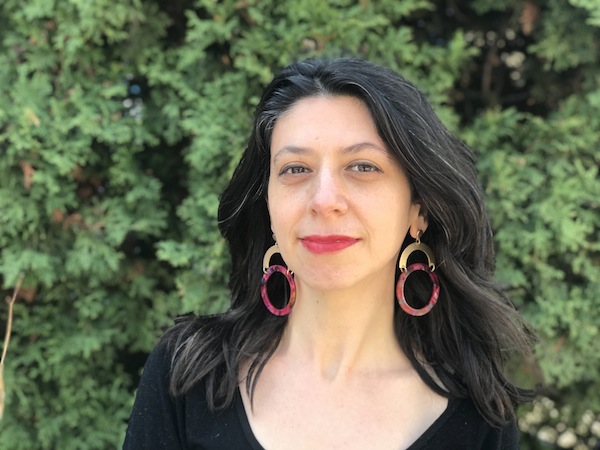
Lisa Richter, author of Nautilus and Bone, joins the Jewish Book Festival Feb. 7 (photo from Lisa Richter)

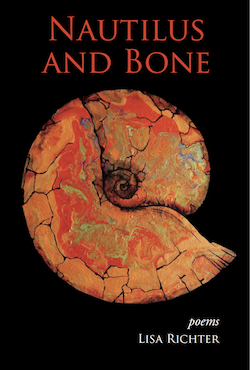
Nautilus and Bone: An Auto/biography in Poems by Toronto poet Lisa Richter – who takes part in the Cherie Smith JCC Jewish Book Festival on Feb. 7 – will send readers down many proverbial rabbit holes. They will want to know more about the writings and life of Yiddish poet and journalist Anna Margolin – not only to better understand Margolin, but to appreciate more fully Richter’s poetic biography of Margolin and her conversations with Margolin’s works.

Margolin is the pen name of Rosa Lebensboym, who was born in Brisk (now Brest, Belarus) in 1887. She immigrated to New York City in 1906, “spent time in London, Paris, Warsaw, Odessa and Palestine before eventually settling permanently in New York in 1913, where she died, in 1952.”

Says Richter: “I was enticed by this Russian-Jewish-American woman writing a hundred years ago about myth-making, roots, identity, alienation, gender fluidity, Eros and desire (at times unmistakably queer, arguably pansexual). Her poetry felt bold and subversive, even by modern standards: H.D. meets Patti Smith.”

Richter does not speak Yiddish, so has relied on Shirley Kumove’s Drunk from the Bitter Truth: The Poems of Anna Margolin, a translation of Margolin’s volume of poems, Lider (Poems), with a “thorough and comprehensive introduction to Margolin’s life and work.” Richter also accessed Margolin’s files at YIVO and read Reuben Iceland’s (Ayzland’s) memoir, From Our Springtime: Literary Memoirs and Portraits of Yiddish New York, as well as other source material.

Richter discusses her many reasons for feeling connected to Margolin, including that, as Lebensboym adopted the name Margolin upon arrival in New York, Richter’s maternal great-grandfather, born Samuel Margolin, “changed his surname to the more Russian-sounding Lapitsky to avoid antisemitism when he immigrated to Montreal as a young man in 1903.”

Richter writes, “I like to imagine him meeting Miss Rosa Lebensboym. In my imagination, he passes his old birth name to her, much in the way one would pass along a string of heirloom pearls to one’s daughter (though they would have been roughly the same age, both born in the 1880s).” Richter notes that the name Margolin and its variations come from the Hebrew margoliyot, meaning pearls.

The emotional and spiritual connections come through in Nautilus and Bone. Richter does not claim to explore every facet of Margolin’s life and work. She explains, “The persona I have enacted in these poems hovers on the periphery of my imagination, filtered through my own dreams, preoccupations, (dis)pleasures, experience. I try my best to give a lyric voice to the most essential, enduring aspects of the poet’s life and work as I see her, and to engage in conversation with those parts of myself that are most closely, most symbiotically intertwined with her story.”

And she does so in a wide variety of poetic forms, all of which she wields with great skill. Among the recognition the book has garnered are the Canadian Jewish Literary Award for Poetry and the National Jewish Book Award for Poetry (United States) – “the first time a Canadian poet has ever received this honour,” Richter shared with the Independent.

In Nautilus and Bone, most readers will encounter forms of poetry they’ve never encountered before. “A City at the Sea’s Mouth” is a homolinguistic translation (in this case, English to English). “Primeval Murderess Night Talks Back to Anna Margolin” is a Golden Shovel poem – the “end-words of each line make up the first two lines of Anna Margolin’s poem ‘Primeval Murderess Night,’” notes Richter, crediting the creation of the form to Terrance Hayes. And, as the name suggests, “Anna Margolin Cento” is a cento, in which a poem is composed of lines from other poets’ poems.

“A poem’s form and content are inextricably linked, in the same way that a particular dish can only be made or served in certain kinds of containers,” Richter told the Independent in an email interview. “The same raw dough can be shaped into dinner rolls, pretzels or challah bread – the way you present and shape the material will affect the way it’s consumed and experienced.

“In some cases,” she said, “the form came to me later (the prose poem form of ‘So Uncommonly Smart for a Girl,’ for example) after a traditional, lineated form didn’t seem to be working. In other cases, the form came first, and the poems later. For instance, the long sequence of sonnets at the end of the book became the vehicle for telling the love story of Anna Margolin and her final life-partner, the poet Reuben Ayzland, as the sonnet has a long and distinguished history of wrestling with matters of the heart.

“The process of homolinguistic translation, or ‘re-translating’ a poem from the same language, is a means of engaging/wrestling/ conversing with a source text, and keeping it alive by breathing new life into it, using fresh grammar, syntax and language. I see it as an act of homage and tribute.”

image - Nautilus and Bone book coverSome of the poems were written as early as 2017, said Richter, shortly after her first book – Closer to Where We Began – was published, but “the bulk of the poems were written over the course of a year-and-a-half, from 2019 to spring 2020,” she said. “The original manuscript was much more autobiographical, but once I started researching and writing the Margolin poems, it became clear that the book was to become ‘an auto/biography in poems,’ as the book is subtitled, and was much more about Anna Margolin than it was about me. I have to credit my editor at Frontenac House, Micheline Maylor, for her vision and encouragement for this project. Both she and George Elliott Clarke, my mentor at the Sage Hill Spring Poetry Colloquium, were extremely supportive.”

While Richter’s conversations with Lebensboym/Margolin left her with more questions than answers, Richter said, “I think that’s a good state of mind for a poet to live in. As Rilke famously put it in Letters to a Young Poet, ‘Do not now seek the answers, which cannot be given you because you would not be able to live them. And the point is, to live everything. Live the questions now.’ I don’t think I’ll ever be entirely ‘done’ with Anna/Rosa, but it’s not entirely up to me. For all I know, she’ll be with me for some time…. I would love to learn to read Yiddish someday so I could read and appreciate her work in its original form.”

As for what she hopes readers take away from the conversations, Richter said, “Mystery, uncertainty, history, complexity, ambiguity, ancestral lineage, eros/sensuality, mythmaking. But if a reader just finds one poem in the book that speaks to them, I’m happy.”

Richter will be joined Feb. 7, 6 p.m., by local translator Rachel Mines (Jonah Rosenfeld: The Rivals and Other Stories; see jewishindependent.ca/stories-that-explore-the-mind) in a discussion with moderator Faith Jones. Visit jccgv.com/jewish-book-festival.

Format ImagePosted on January 28, 2022January 27, 2022Author Cynthia RamsayCategories BooksTags Anna Margolin, JCC Jewish Book Festival, Lisa Richter, Nautilus and Bone, poetry, Rosa Lebensboym, Yiddish

Novels about love, art

Inspired by real people, Jai Chakrabarti and Michaela Carter have written novels that explore the Holocaust and its impacts. Their books also happen to share common themes. Notably, the power of art to change the world, and the power of love to change a person.

Chakrabarti (A Play for the End of the World) joins Gary Barwin (Nothing the Same, Everything Haunted: The Ballad of Motl the Cowboy) on Feb. 6 in a Cherie Smith JCC Jewish Book Festival event, moderated by Helen Pinsky, called Mythical Quests. Carter (Leonora in the Morning Light) and Meg Waite Clayton (The Postmistress of Paris) take part in the event Art and War on Feb. 9, moderated by Hope Forstenzer.

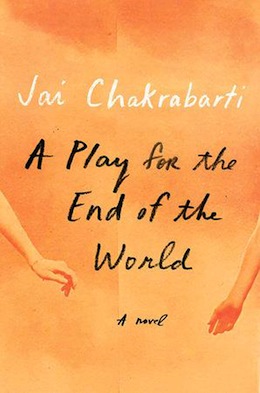
In Chakrabarti’s A Play for the End of the World, the quest is that of child survivor Jaryk Smith, who travels from New York to India in 1972 to collect the ashes of his best friend and fellow Holocaust survivor, Misha, who died of a heart attack. Misha had ventured to India to help a village mount a production of Rabindranath Tagore’s Dak Ghar (translated as “The Post Office”), which Jaryk and Misha had performed when they were under the care of Janusz Korczak (aka Pan Doktor by the children) in Warsaw in 1942.

image - A Play for the End of the World book coverWhile Jaryk, Misha and all the other characters are fictional, Korczak and Dak Ghar were very real. “The play is about a dying child living through his imagination while quarantined,” writes Chakrabarti in the author’s note. “Pan Doktor chose to stage the play to help his orphans reimagine ghetto life and to prepare them for what was to come.”

The Indian villagers are also being prepared for what is to come – they are under threat of expulsion, or worse, from the government; already, protesters have been imprisoned, even killed. The Indian professor promoting the play wants to bring international attention to their plight.

Tangled up in all this is Lucy, who Jaryk loves but abandons in New York when he hears about Misha’s death. One of the many choices Jaryk faces is whether he can accept the happiness that Lucy and life in general can offer him.

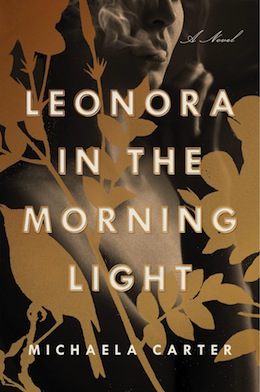
Happiness is a rare and difficult-to-achieve state in Carter’s novel, as well. The Leonora of the book’s title is artist Leonora Carrington, who was born in England in 1917 and died in Mexico in 2011. An unofficial part of the Surrealist movement (because women weren’t allowed), Carrington was an acclaimed painter and writer. Of her relationships, the most famed would be with fellow Surrealist Max Ernst, who was twice her age at their time of meeting.

“I was drawn to Leonora Carrington before I even knew who she was,” writes Carter in the author’s note. “Long intrigued by the Surrealist artists, by their playful take on creativity and their celebration of surprise and strangeness, I had set out, in 2013, to write a fictional story placed among them, set between the wars and with a young woman at its centre.”

image - Leonora in the Morning Light book coverIt was only later that Carter, at the Tate Gallery, came across a piece by Carrington, as well as the book Leonora Carrington: Surrealism, Alchemy and Art by Susan L. Aberth. For months, Carter says, she resisted the idea of writing a novel, but “read everything about Leonora I could get my hands on, as well as everything available about Max and Peggy Guggenheim, who was, I realized, an integral part of their story.”

Ernst had many lovers, including Guggenheim, who helped him get to the United States, but Carter’s novel posits that Carrington was his true soulmate, and that he was Carrington’s. Their affair is interrupted by the Second World War, however, and, after we get to meet the couple in 1937, the novel mainly alternates between Carrington’s story from that point and Ernst’s from 1940, as he is trying to escape from France. While the two met in London, they moved to Paris – Ernst first (Carrington’s father apparently had a hand in Ernst’s work being declared “the product of an immoral mind,” which was an arrestable offence at the time in London), then Carrington.

Leonora in the Morning Light – which is named after a painting Ernst made of Carrington – takes readers to 1943, by which time Ernst is in Arizona and Carrington is in Mexico; both married to other people.

“During her 94 years on this earth, she created thousands of magical, mystical works of art – drawings, paintings, statues, masks, plays, short stories and her masterful novel, The Hearing Trumpet,” writes Carter of Carrington. “She was also an eco-feminist who fervently believed in the innate rights of all individuals – of humans, animals, plants and the earth itself.”

Visit jccgv.com/jewish-book-festival for the full festival lineup and tickets.

Posted on January 28, 2022January 27, 2022Author Cynthia RamsayCategories BooksTags fiction, historical fiction, Jai Chakrabarti, Janusz Korczak, JCC Jewish Book Festival, Leonora Carrington, Max Ernst, Michaela Carter, painting, Rabindranath Tagore, Surrealism, theatre
Ben Mink’s impressive CV

Ben Mink’s impressive CV

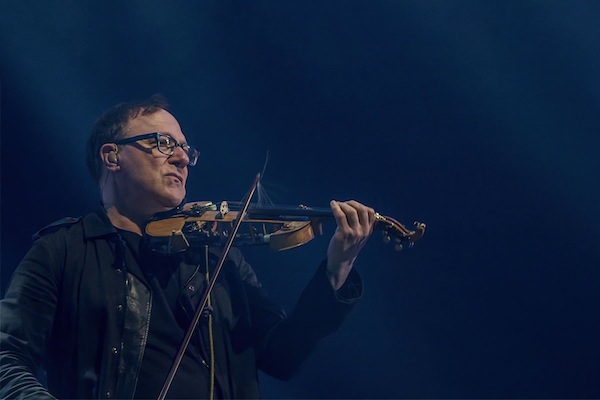
Ben Mink is one of the musicians featured in Under the Radar, by David Eisenstadt. (photo from sonicperspectives.com)

 ***

photo - David Eisenstadt
David Eisenstadt (photo from tcgpr)

Under the Radar: 30 Notable Canadian Jewish Musicians, which I wrote with Alan L. Simons (editor), takes an historical approach, covering musicians of most genres and genders, some alive and others having passed on, all skilled, but excelling somewhat out of sight. This is the second in a three-part series of excerpts from the book, which was released last November, and is available in paperback and as an ebook from amazon.ca. The excerpts feature performers with B.C. roots: Robert Silverman, Ben Mink and Mike Kobluk.

***

Ben Mink is best recognized as k.d. lang’s longtime collaborator – together they penned the hit tune “Constant Craving,” and more. Mink is also the “Movie Music King,” wrote Glen Schaefer in Victoria’s Times Colonist.

Mink has worked with many talented musicians – including Susan Aglukark, the Barenaked Ladies, Elton John, Feist, Geddy Lee and Rush, Heart, Anne Murray, Roy Orbison and Wynonna Judd. How did this Canadian songwriter, multi-instrumentalist and music producer assemble such an impressive CV?

The son of Polish Jewish Holocaust survivors, who was raised in Toronto, said, “My formative years were steeped in Jewish music and popular folk-country, blues and rock. My father, raised in a strict Ger Chassidic household, had a wonderful voice and took every opportunity to use it. My mother was less religious, but from a very cultured Warsaw family.”

In January 1969, Mink joined Mary-Lou Horner, the rock/country house band at Toronto’s landmark club, the Rock Pile. “We opened for great bands including Led Zeppelin,” said Mink. He then performed with the Blazing Zulus, Stringband, FM, and Murray McLauchlan’s Silver Tractors.

image - Under the Radar book coverOn Rush’s 1982 album Signals, Mink played electric violin. In 2000, he co-wrote, produced and played violin and guitar on Lee’s My Favourite Headache. He recorded with Rush again on their 2007 album Snakes & Arrows and appeared live with them on their 2015 final R40 tour.

Mink connected with k.d. lang while with the French Canadian band CANO during the World Science Fair in 1985 in Tsukuba, Japan. This led to recording her first major album for Sire Records, Angel with a Lariat. Thus began a nearly 20-year collaboration where he performed, co-wrote and produced several of her albums. He also played violin, guitar and mandolin with her band, the Reclines.

All of Mink’s collaborations with k.d. lang are too numerous to mention here, but he co-wrote eight songs on Ingénue, including “Constant Craving,” and co-produced the record. “Constant Craving” garnered k.d. lang the 1992 Grammy for best female pop vocal performance.

Mink has also played with Willie P. Bennett, Bruce Cockburn, Dan Hill, Mendelson Joe, Sarah McLachlan, Methodman, Prairie Oyster, Raffi, Jane Siberry, Ian and Sylvia Tyson and Valdy.

The “Movie Music King” provided the soundtrack to Fifty Dead Men Walking, winning a Leo for best musical score for a feature-length drama and a 2010 Genie Award nomination for best achievement in music – original score.

Mink has garnered awards for TV soundtracks as well, including a 2007 Gemini for best biography documentary program, Confessions of an Innocent Man, a story about British-Canadian engineer William Sampson.

Reflecting on his Jewish upbringing, Mink said, “That old-world sensibility has informed every project I’ve worked on, including Ingénue, which owes a debt to klezmer and Yiddish cabaret. It’s the paradigm by which I process most everything.”

Mink is one of a few artists who has ever shared songwriting credit with Mick Jagger and Keith Richards. He and k.d. lang received co-credit for the Rolling Stones single “Anybody Seen My Baby” in 1997, after Richard’s daughter noted the chorus was similar to “Constant Craving.”

Rounding up the overview of his many collaborations, Mink produced/ performed on the Black Sea Station’s debut record, Transylvania Avenue, and more than one recording with Chava Alberstein, as well as with the Klezmatics, Finjan and others.

While a prolific collaborator, Mink has only released one recording under his name, Foreign Exchange (1980/Passport Records).

Mink taught at the University of British Columbia, Simon Fraser and Western Washington universities and lectured at New York University.

Since 2018, he has “mentored up-and-coming performers and [done] community service. He serves on the Vancouver Symphony Orchestra board and the VSO School of Music.”

From his Vancouver home, Mink said he is busy “experimenting with ambient electronic soundscapes, writing nautical fiddle tunes and curating my parent’s personal musical archives.”

Format ImagePosted on January 28, 2022January 27, 2022Author David EisenstadtCategories BooksTags Ben Mink, k.d. lang, Under the Radar
Horn co-launches book fest

Horn co-launches book fest

Dara Horn and David Baddiel open the Cherie Smith JCC Jewish Book Festival on Feb. 6. (photos from JBF)

Early in her new book, People Love Dead Jews: Reports from a Haunted Present, Dara Horn reflects on a controversy at the Anne Frank House museum in Amsterdam, where an employee who wore a kippa to work was told by his employers to hide it under a baseball cap because it might interfere with the museum’s “independent position.”

“The museum finally relented after deliberating for four months, which seems like a rather long time for the Anne Frank House to ponder whether it was a good idea to force a Jew into hiding,” writes Horn.

The snappy summation is typical of the author’s approach: biting wit in the face of affronts of various dreadfulness. And the affronts pile up, supporting the incendiary thesis of the title.

Horn discusses the world’s interest in Anne Frank’s story, including the insistence on repeating the line from her diary, “I still believe, in spite of everything, that people are truly good at heart.” Leaving aside the fact that Frank wrote these words before she experienced how truly evil at heart some people can be, Horn writes, the line provides a “gift of grace and absolution from a murdered Jew (exactly the gift that lies at the heart of Christianity).”

Horn, who is part of the Feb. 6 launch event for the 2022 Cherie Smith JCC Jewish Book Festival, is a novelist with a PhD in Yiddish and Hebrew comparative literatures. Her take on contemporary antisemitism is suffused with her understanding of how Western audiences expect “coherence” and often an uplifting ending to the stories in our literature or other entertainment.

“Holocaust novels that have sold millions of copies both in the United States and overseas in recent years are all ‘uplifting,’ even when they include the odd dead kid,” she writes. “The Tattooist of Auschwitz, a recent international mega-bestseller touted for its ‘true story,’ manages to present an Auschwitz that involves a heartwarming romance. Sarah’s Key, The Book Thief, The Boy in [the] Striped Pyjamas, and many other bestsellers, some of which have even become required reading in schools, all involved non-Jewish rescuers who risk or sacrifice their own lives to save hapless Jews, thus inspiring us all.”

These uplifting stories, she points out, make up a large chunk of Holocaust-related literature, yet illustrate phenomena that were almost nonexistent during the Holocaust: non-Jews risking their lives to save Jews.

“Statistically speaking, this was not the experience of almost any Jews who endured the Holocaust,” she writes. “But for literature in non-Jewish languages, that grim reality is both inconvenient and irrelevant.”

She summarizes: “Dead Jews are supposed to teach us about the beauty of the world and the wonders of redemption – otherwise, what was the point of killing them in the first place?”

On the subject of non-Jewish rescuers, Horn goes into an extensive exploration of the life of Varian Fry, an American man who worked for the Emergency Rescue Committee, a group of American intellectuals that, beginning in 1940, distributed emergency American visas to endangered European artists and thinkers. What they envisioned rescuing was not so much the individuals themselves, but the very concept of European civilization, which they correctly believed to be in mortal danger from the Nazis. But, rescuing a culture’s greatest artists, writers and thinkers and sequestering them to safety in America, Horn posits, is itself “a sort of eugenics.”

For someone with an explicit distaste for disproportionate attention to rescue stories, Horn devotes a significant chunk in the middle of the book to what amounts to a biography of Fry. As the reader starts wondering how this fits into the larger thesis, Horn points out how the veneration of the more universal European culture for which Fry and his colleagues risked their lives was not extended to the particular Jewish culture that was the expressed target of the Nazis.

“Fry tried to save the culture of Europe, and for that he should be remembered and praised,” Horn writes. “But no one tried to save the culture of Hasidism, for example, with its devotion to ordinary, everyday holiness – or Misnagdim, the opposing religious movement within traditional Eastern European Judaism, whose energy in the years before the war was channeled into the rigourous study of musar, or ethics. Entire academies devoted to the Musar Movement were destroyed, their books burned out of the world, their teachers and leaders and scholars murdered – all the things that everyone feared would happen to the vaunted culture of Europe. No rescue committee was convened on behalf of the many people who devoted their lives and careers to … the actual study of righteousness. For them, there were no Varian Frys.”

Horn notes that, in the 1990s, there was a burgeoning of Holocaust museums and exhibitions all over the United States, including the opening of the United States Holocaust Memorial Museum in Washington, D.C.

“The idea was that people would come to these museums and learn what the world had done to the Jews, where hatred can lead. They would then stop hating Jews.

“It wasn’t a ridiculous idea, but it seems to have been proven wrong. A generation later, antisemitism is once again the next big thing, and it is hard to go to these museums today without feeling that something profound has shifted.”

She suggests that the lesson some people take from these exhibitions is the opposite of what was intended. The idea of the museums is that everyone should learn the depths to which humanity could skin sink, she writes.

“But this has come to mean that anything short of the Holocaust is, well, not the Holocaust. The bar is rather high.”

Therefore, when people are shot in a synagogue in Pittsburgh or San Diego, this is “not the Holocaust” and, presumably, nothing to get too concerned about in the greater scheme of Jewish victimization. Harassing Jewish college students is not the Holocaust. Lobbing missiles at sleeping children in Israeli cities is not the Holocaust. Even hounding ancient Jewish communities out of entire countries and seizing their assets is not the Holocaust. Horn does not mention Martin Niemöller, but she seems to be suggesting that, if “they” are coming for “the Jews,” most people will not speak up until it reaches something akin to the Holocaust, which we may have unwittingly recast not as the endpoint of hatred and antisemitism but as the stick by which the world measures threats to Jewish people.

An antisemitic attack in Jersey City, N.J., provides Horn with insights into how mainstream audiences try to make sense of antisemitic violence.

New Jersey’s flagship newspaper, the Star-Ledger, noted that “the attack that killed two Orthodox Jews, an Ecuadorian immigrant and a Jersey City police detective has highlighted racial tension that had been simmering ever since ultra-Orthodox Jews began moving to a lower-income community.”

Horn points out a few of the factual and logical inconsistencies in the media’s coverage, including that the assailants had never lived in Jersey City, so they weren’t reacting to any state of tension there. Moreover, the community that was attacked was accused of “gentrifying” a “minority” neighbourhood.

“This was remarkable, given that the tiny Hasidic community in question, highly visible members of the world’s most consistently persecuted minority, in fact came to Jersey City, fleeing gentrification, after being priced out of long-established Hasidic communities in Brooklyn,” she writes.

The book concludes rather unexpectedly, not with recipes for solving the contemporary crisis or explicit calls to action, but rather with reflections of her experience with Daf Yomi, the page-a-day, seven-and-a-half-year journey through the Babylonian Talmud. She provides a lovely and succinct explanation of Rabbinic Judaism.

“Until the year 70 CE, Judaism had been centred at the ancient temple in Jerusalem, where worship was mediated through priests offering sacrifices,” writes Horn. “After the Romans destroyed this temple and exiled the people, there was no particular reason for this religion, or even simply this people, to survive in any form. But on the eve of this temple’s destruction, one sage, Rabbi Yochanan ben Zakkai, had himself smuggled out of the besieged city of Jerusalem in a coffin, after which he convinced the Roman general Vespasian to allow him to open an academy for Torah scholars in a small town far from Jerusalem. Both Rabbi Yochanan ben Zakkai and Judaism faked their own deaths in order to survive this cataclysm. The small cadre of scholars in that small town reinvented this religion by turning it into a virtual-reality system, replacing temple rituals with equally ritualized blessings and prayers, study of Torah, and elaborately regulated interpersonal ethics. The sages frantically arguing about when and how to recite which prayers are survivors and descendants of survivors, remnants of a destroyed world. They are anxious about remembering every last detail of that lost connection to God, like mourners obsessing over the tiniest memories of a beloved they have lost. One might expect that this memory would eventually fade, that people would ‘move on.’ Instead the opposite happens. Once the process of memory becomes important, the details do not fade but rather accrue – because the memory itself becomes a living thing, enriched by every subsequent generation that brings new meaning to it.”

Without batting readers over the head, Horn seems to be advocating what Jews have always done – finding meaning, comfort and guidance by interrogating ideas and arguing across centuries with the greatest minds of the tradition. She may be, as she says, “part of a ridiculously small minority that nonetheless played a behemoth role in other people’s imaginations,” but her Daf Yomi practice reminds her that she is far from alone.

“I turn the page and return, carried by fellow readers living and dead, all turning the pages with me,” she concludes.

Horn will be joined at the virtual festival opening Feb. 6, 1 p.m., by David Baddiel, whose book Jews Don’t Count shares themes and emotions with Horn’s. Baddiel’s book, like others in this (sadly) flourishing genre, was reviewed in these pages recently (jewishindependent.ca/ tackling-the-hatred-head-on). They will be in conversation with Marsha Lederman, Western arts correspondent for the Globe and Mail.

For the full book festival schedule, visit jccgv.com/jewish-book-festival.

Format ImagePosted on January 14, 2022January 13, 2022Author Pat JohnsonCategories BooksTags antisemitism, book fest, Cherie Smith JCC Jewish Book Festival, Dara Horn, history, Holocaust, Holocaust literature
Beauty amid harshness

Beauty amid harshness

Rachel Rose, left, and Ami Sands Brodoff take part in the Cherie Smith JCC Jewish Book Festival on Feb. 8.

None of us knows what lies ahead. We might think we do, but a lack of awareness one moment can have tragic impacts, mental or physical illness can overtake us, and our actions and reactions can hurt ourselves and others, whether harm is intended or not. Control is a fiction. And two recently published short story collections that will be featured at the Cherie Smith JCC Jewish Book Festival on Feb. 8 explore that fact with tales that should make most of us feel grateful for the relative boringness of our lives.

Poet Rachel Rose’s debut novel, The Octopus Has Three Hearts, presents a series of unconventional characters in life-challenging situations difficult to imagine oneself in and yet portraying familiar emotions. The characters in Ami Sands Brodoff’s The Sleep of Apples will be easier for many readers to recognize in themselves, but they are also a diverse group of people for whom living is more of a task than a pleasure. In both collections, instances of uncomplicated joy, love and connection are rare. Nevertheless, they leave one feeling melancholically appreciative of the incomparable value of life, and acutely mindful of its fragile nature.

Rose’s stories are explicitly linked by the animals with whom her people interact, from dogs to rats to pigs to parrots and others, including, of course, an octopus. The title story centres around a polyamorous relationship, the narrator husband, his wife (who is a biologist at an aquarium) and one of his wife’s partners trying to find an octopus who’s escaped their tank under the biologist’s watch. The animal’s attributes – intelligence, fluidity, ambiguity, etc. – have obvious symbolic meaning not only within this particular chapter but the collection as a whole; similarly with the other animals that figure into Rose’s narratives.

The Octopus Has Three Hearts was longlisted for the Scotiabank Giller Prize, and Rose is no stranger to awards and recognition for her writing. She is the poet laureate emerita of Vancouver for good reason. She writes with succinct and oft-times detailed brutality, with touches of dark humour, and with much insight into humanity. Elements of her characters – whether they be ex-cons, cheating spouses, or people who just made a terrible mistake – are within all of us to some degree and our world would probably be a better place if we confronted these aspects of ourselves, instead of burying them or pretending they don’t exist.

Similar themes appear in The Sleep of Apples, a more overtly Jewish compilation. Rather than animals linking the chapters, the people are related or connected in some way to one another. Miri’s Bubbe Zelda dies in the first story and, right away, loss, guilt, love, identity, tradition – throughout the book, no matter the characters’ gender, sexuality, age, upbringing, relationship and friendship choices, career path, they must deal with these and other basic elements of existence. Death is always present. But so, too, is the will to live, to forgive, and to care for oneself and for others.

It is interesting to think of the creative process and how people come up with stories that are out of the ordinary yet resonate. Some of the language and situations in these short stories will shock and discomfort readers. Many of the characters will not resemble people most of us regularly encounter. But, ideally, if we’re willing, they will open our minds in a way that will help us navigate the real world more thoughtfully and with more compassion.

The Cherie Smith JCC Jewish Book Festival is online only this year. For the full lineup of authors, visit jccgv.com/jewish-book-festival.
Format ImagePosted on January 14, 2022January 13, 2022Author Cynthia RamsayCategories BooksTags Ami Sands Brodoff, book fest, Cherie Smith JCC Jewish Book Festival, fiction, Rachel Rose, short stories
Classical pianist & educator

Classical pianist & educator

Robert Silverman is one of the musicians featured in Under the Radar, by David Eisenstadt. (photo from Robert Silverman) 

***

photo - David Eisenstadt
David Eisenstadt (photo from tcgpr)

Under the Radar: 30 Notable Canadian Jewish Musicians, which I wrote with Alan L. Simons (editor), takes an historical approach, covering musicians of most genres and genders, some alive and others having passed on, all skilled, but excelling somewhat out of sight. This is the first in a three-part series of excerpts from the book, which was released last November, and is available in paperback and as an ebook from amazon.ca. The excerpts feature performers with B.C. roots:  Robert Silverman, Ben Mink and Mike Kobluk.

***

Robert Herschel Silverman is one of Canada’s premier pianists. He was born in Montreal, Que., on May 25, 1938, to Jewish parents from the Ukraine and Romania. Globe and Mail reporter Marsha Lederman wrote, “when he was just 4, after seeing how he was drawn to classical music programs on the radio, he was signed up (by his parents) for piano lessons. By his second lesson, Silverman could identify notes by ear. He could read sheet music before he could read words. But even as he continued with his lessons through high school and university, he never considered a career in piano.”

At 6, Silverman played his first recital. His debut at 14 was with the Montreal Symphony Orchestra. At 23, he planned to become an engineer but decided to be a classical pianist. Lederman reported Silverman saying, “It was really, really late. It’s not the way to do it.”

He earned undergrad arts and music degrees in the 1960s from Sir George Williams (now Concordia) University. He studied with Dorothy Morton (the daughter of Silverman’s childhood piano teacher) at McGill University, and with Cecile Genhart at the Eastman School of Music, Rochester, N.Y. He also earned a Canada Council grant to enrol at the Vienna Academy of Music.

Silverman won the top piano prize at the Jeunesses Musicales Canada national competition, playing twice at Expo ’67. His Allied Arts piano competition success earned a recital debut in Chicago’s Orchestra Hall in 1970. He made his New York Lincoln Centre debut before he turned 40, in 1978, where the New York Timesdescribed him as “a polished and thoroughly finished technician and an extremely articulate [virtuoso].”

image - Under the Radar book coverSilverman performed with global and Canadian orchestras conducted by John Eliot Gardiner, Neeme Jarvi, Kiril Kondrashin, Zdenek Macal, Seiji Ozawa and Gerard Schwarz.

In his 30s, he was an artist-in-residence at Nazareth College in Rochester, N.Y.; he also taught at the University of California in Santa Barbara from 1969 to 1970, and the University of Wisconsin-Milwaukee 1970-73. He moved to Vancouver to join the University of British Columbia as professor of music (piano) in 1973. He was the director of UBC’s music school 1991-95, retiring as professor emeritus of music in 2003. Celebrating his 30-year tenure, Silverman received an honorary doctorate in 2004.

Working with Adrienne Cohen, the former music program director at Toronto’s Koffler Centre of the Arts, Silverman, in 2002, was the artist-in-residence.

“My relationship was informal with no written contract. I received an honorarium for seasonal concerts. I appreciated the opportunity to maintain a visible presence in Toronto’s music life and to help Adrienne enhance and enlarge classical music’s role. Although I’m not observant from a religious standpoint, I am keenly aware of my Jewish heritage and pleased to be affiliated with Koffler, whose programs were attuned to the Jewish community in its traditional sense,” he said.

“I grew up when many North American Jewish luminaries were visible – Horowitz, Rubinstein, Bernstein, Reiner, Heifetz, Menuhin and the up-and-comers, Fleisher, Graffman and Rabin. My musicality was shaped by their warm manner of phrasing and attention to tonal beauty, qualities I hold dear and continue to strive towards.”

He returned to Montreal in 2008 to initiate the Dorothy Morton Visiting Artist series at McGill University’s Schulich School of Music, performing there on its 10th anniversary. He and his wife also endowed a biannual Robert and Ellen Silverman Piano Concerto Competition.

His discography numbers 30-plus CDs and 12 LPs. He received an Order of Canada in 2013.

As a Vancouver-based retiree and a Steinway artist, Silverman devotes himself full-time to recordings and concerts and is heard often on the CBC and Radio-Canada networks.

Format ImagePosted on January 14, 2022January 13, 2022Author David EisenstadtCategories BooksTags classical music, music, piano, Robert Silverman, Under the Radar
Wolf & lamb find peace

Wolf & lamb find peace

In her new book, Rabbi Dr. Laura Duhan Kaplan explores lessons for humans from the animal world.

Good things come in small packages. A thin volume by Vancouver rabbi, philosopher and academic Laura Duhan Kaplan packs ancient and modern wisdom into a delightful parcel.

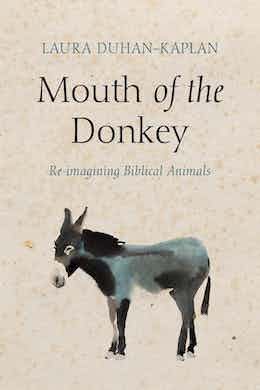
Duhan Kaplan is director of inter-religious studies and professor of Jewish studies at Vancouver School of Theology, professor emerita of philosophy at University of North Carolina at Charlotte and rabbi emerita of Vancouver’s Or Shalom Synagogue. Her book Mouth of the Donkey: Re-imagining Biblical Animals was released this year. To her resumé, you might add a sort of Dr. Doolittle role, as she returns frequently to her ability to “talk” to the animals.

“I did a little research into communication,” she writes. “Observe a creature’s form of life, discern its form of communication.… I didn’t look specifically for sound, gesture or expressions of feeling. Instead, I just watched animals interact. And, bit by bit, I began to learn their languages. Since then, I’ve conversed with cats by looking at things and then back at the cat. I’ve given information to wasps and hornets by making gestures. Spoken to crows with vocal clicks and clacks arranged in sentences. (Since I have a limited crow vocabulary, it’s a string of nonsense words, but they give me credit for trying.) And, oddest of all, I’ve befriended flies through telepathy. After all, sight, sound, thought and movement are all wavelengths on which communication happens. Different creatures favour different wavelengths. A good neighbour pays attention and meets others halfway.”

(Disclosure: In the book’s acknowledgements, Duhan Kaplan notes that I critiqued some of the earliest iterations of a couple of chapters.)

image - Mouth of the Donkey book coverIn the book, Duhan Kaplan explains that she uses four kabbalistic levels of analysis: peshat, plain literal meaning; derash, exposition of recurring ethical themes; remez, hints to allegorical meanings; and sod, secret allusions to God’s true nature.

She considers both the depictions of humans as sheep in God’s “flock,” and the intertwining of the lives of the ancient Israelites with their own flocks – “Take your sheep and cattle and go!” God tells the Israelites in Exodus.

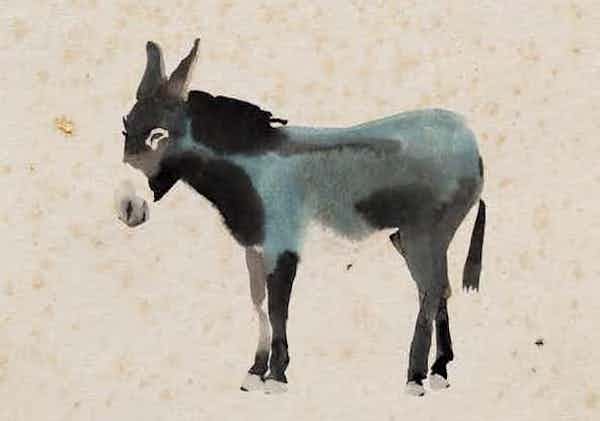
She contemplates the multiple times where the ancient literature depicts a donkey as a spiritual guide. She weaves in personal stories, such as visit to a donkey refuge here in British Columbia.

“Equines communicate well through touch. So, with my hand scratching his neck, we had a wordless conversation.” This segues into the Bible’s “most famous donkey,” that of Balaam, whose interaction with an angel sends Balaam on, so to speak, a different path.

Biblical writers, both Jewish and Christian, she writes, associate donkeys with “hope, divine guidance and messianic time.”

The blurry line between humans and other animals is a recurring theme, as is the transfiguration of one sort of creature into another. In the Book of Numbers, when Moses sends 12 scouts to tour the land of Canaan, they come back with stories of wonder and terror. Vineyards produce clusters of grapes so large that  two people are needed to carry them but the farmers are gigantic – “Next to them, we feel like grasshoppers.” But, as the story unfolds, a short 40 years later, the Canaanites come to see the Israelites not as grasshoppers but as a powerful plague of locusts: “They will lick up everything around us!” declares the king.

Isaiah’s oracle about the wolf and the lamb living in peace is seen by many as a fable of human coexistence. Lambs, on the other hand, can represent defeated nations. But Duhan Kaplan flips power dynamics, noting that, in Isaiah’s oracle, the lambs control the land and exhibit a model for coexistence: “The lambs are peaceful; they govern without a policy of revenge. Graciously and with mercy, they allow the wolves to sojourn as guests.”

The book takes a surprising turn to the immediate present with a discussion of Indigenous-settler peace and friendship treaties and how they may apply to the reconciliation process our country is currently undergoing.

“The treaties are an expression, I might say, of people committed to an ethic like the one Isaiah describes,” writes Duhan Kaplan. “Like the wolf and the lamb, they resist conquest and revenge. They welcome one another as fellow residents. Like the lion and the ox, who share a food source, they rise to the opportunity for peace. And, like the bear and the cow, they understand that the relationship must be renewed in every generation.”

Format ImagePosted on December 17, 2021December 16, 2021Author Pat JohnsonCategories BooksTags animals, Bible, education, Judaism, Laura Duhan Kaplan, Mouth of the Donkey, Torah

Posts pagination

Previous page Page 1 … Page 13 Page 14 Page 15 … Page 46 Next page
Proudly powered by WordPress